
The Nervous Cockerpoo: Why Grooming Often Goes Wrong (and How Better Communication Can Fix It) – A Guide to Cockerpoo Grooming
Cockerpoos are one of the most popular dogs in the UK — and also one of the most discussed breeds on owner and groomer forums.
Topics like matted coats, difficult grooming appointments, nervous behaviour, and “bad grooming experiences” come up again and again.
This blog was inspired by a nervous Cockerpoo who had already visited multiple groomers without success. Sadly, this is not unusual — and in most cases, the problem isn’t the dog or the groomer alone.
It’s often a lack of communication, understanding, and realistic expectations around Cockerpoo coat care and behaviour. Here’s the video on you tube:
Understanding the nuances of Cockerpoo Grooming is essential for a positive experience.
Why Are Cockerpoos So Challenging to Groom?
Cockerpoos are a crossbreed, between a Cocker Spaniel and a Poodle. This means:
-
There is no single “standard” Cockerpoo coat
-
Temperaments vary widely
-
Grooming needs are often misunderstood
Many owners choose a Cockerpoo for their friendly nature and teddy-bear looks — but are unprepared for the grooming commitment that comes with Cockerpoo Grooming.
Common Grooming Issues Seen in Cockerpoos
Cockerpoos regularly appear in grooming discussions due to a combination of coat and behaviour challenges:
-
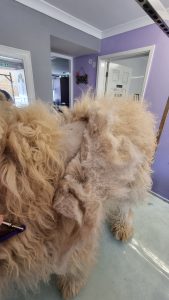
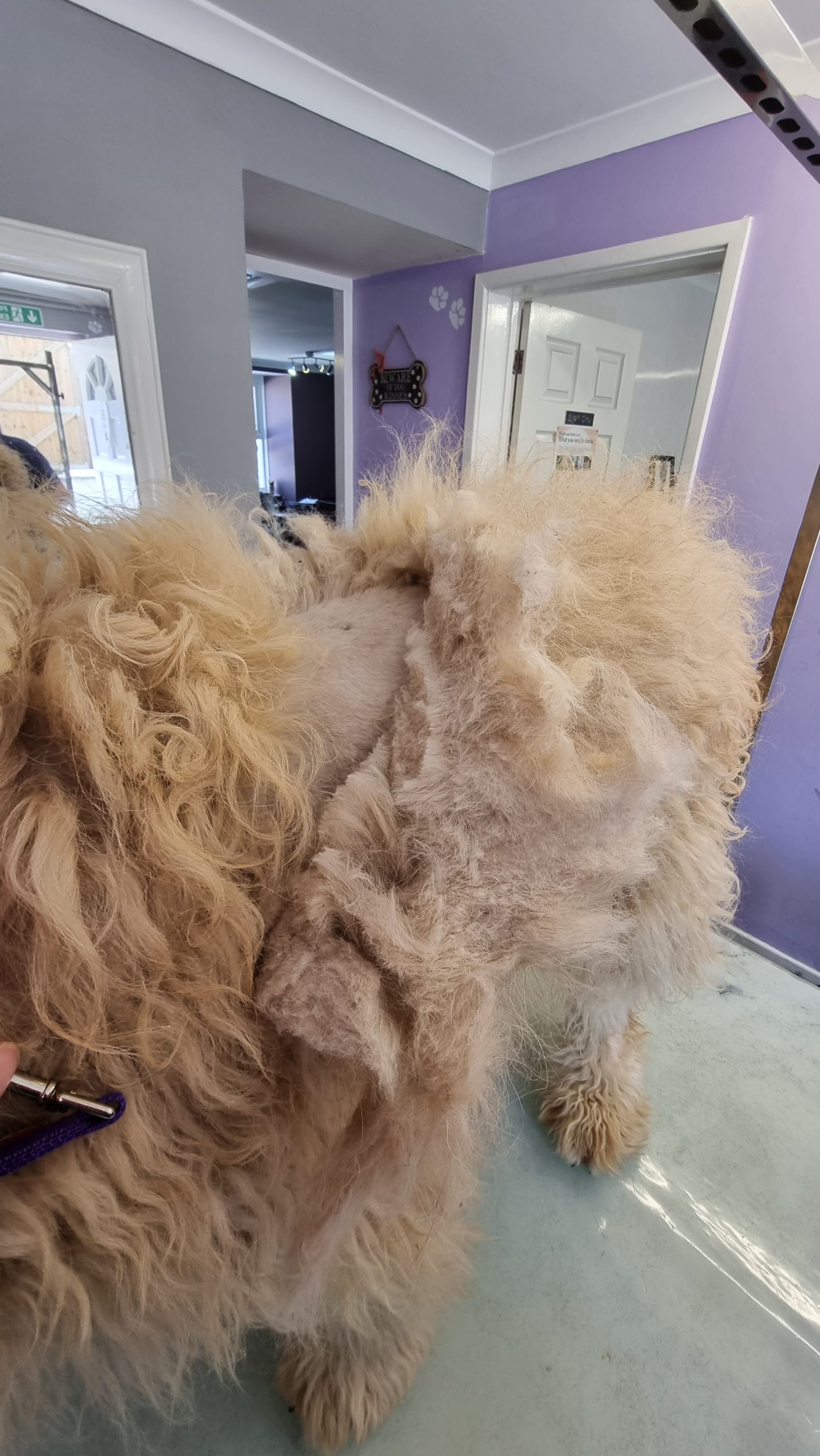
Dense, fast-growing coats that mat easily
-
Combination coats (spaniel + poodle textures)
-
Tight curls hiding skin issues and knots
-
Sensitivity around legs, feet, face, and ears
-
Anxiety caused by previous grooming experiences
-
Lack of early grooming training and desensitisation
When these factors combine, grooming can become stressful for both the dog and the groomer.
The Nervous Cockerpoo: Behaviour Is Communication
A nervous Cockerpoo is not being “difficult” or “naughty”.
They may be communicating:
-
Fear from a past grooming experience
-
Pain caused by matting or tight coats
-
Confusion due to inconsistent handling
-
Stress from unfamiliar environments
Dogs that have been passed between groomers without a clear plan often become increasingly anxious, not less.
The Importance of Communication Between Groomers and Cockerpoo Owners
One of the biggest causes of grooming failure is poor communication.
What Groomers Need From Cockerpoo Owners
-
Honest information about:
-
Previous grooming experiences
-
Behaviour issues (biting, fear, shaking, restraint sensitivity)
-
Home grooming routines (or lack of them)
-
-
Realistic expectations about:
-
Coat length
-
Frequency of grooming
-
What is achievable safely and humanely
-
What Cockerpoo Owners Need From Groomers
-
Clear explanations of:
-
Coat condition and matting
-
Why certain styles aren’t possible
-
Behaviour concerns and handling limits
-
-
Education around:
-
Coat maintenance between grooms
-
Tools that should (and shouldn’t) be used at home
-
How stress affects grooming outcomes
-
Good communication builds trust, safety, and long-term success.
Coat Care: The Biggest Factor in Cockerpoo Grooming Success
Cockerpoo coats require consistent, correct maintenance — not occasional brushing.
Essential Cockerpoo Coat Care Tips
-
Brush thoroughly at least 3–4 times per week
-
Use:
-
A slicker brush
-
A metal comb to check down to the skin
-
-
Pay extra attention to:
-
Ears
-
Armpits
-
Groin
-
Behind the ears
-
Legs and paws
-
-
Avoid relying on:
-
“Once a week” brushing
-
Bathing without brushing first
-
Dematting tools without training
-
A well-maintained coat directly reduces:
-
Grooming time
-
Stress and discomfort
-
Behavioural fallout during appointments
Why Some Cockerpoos Are Turned Away by Groomers
When a Cockerpoo is:
-
Severely matted
-
Highly anxious or reactive
-
Unable to be handled safely
A responsible groomer may refuse or stop a groom — not out of unwillingness, but out of concern for the dog’s welfare.
In some cases, a vet-assisted groom or a reset haircut is the kindest option to allow the dog to start fresh.
Setting Your Cockerpoo Up for Grooming Success
For nervous Cockerpoos especially, progress comes from patience and teamwork.
Steps That Help Nervous Cockerpoos
-
Regular grooming from an early age
-
Short, positive grooming visits
-
Consistency with the same groomer
-
Open discussions about behaviour and coat condition
-
Accepting that comfort comes before appearance
A calmer grooming experience benefits:
-
The dog
-
The owner
-
The groomer
Final Thoughts: It’s Not the Breed — It’s the Understanding
Cockerpoos are loving, intelligent dogs — but they are not low-maintenance.
When grooming struggles arise, the solution is rarely blame. Instead, it’s found in:
-
Better education
-
Clear communication
-
Realistic expectations
-
Commitment to coat care
-
Respect for the dog’s emotional limits
When groomers and Cockerpoo owners work together, even the most nervous dog can learn that grooming doesn’t have to be frightening.
If you would like to ask any further questions or discuss your grooming requirements you can call Chris on 07852569375 or email chris@dogandbonegrooming.co.uk
